Mass Timber Techniques
Mass timber products include plywood (the original engineered wood product); medium-density fiberboard (MDF); laminated veneer lumber (LVL); glulam; cross laminated timber (CLT); nail laminated timber (NLT); dowel laminated timber (DLT); and heavy timber tongue & groove boards.
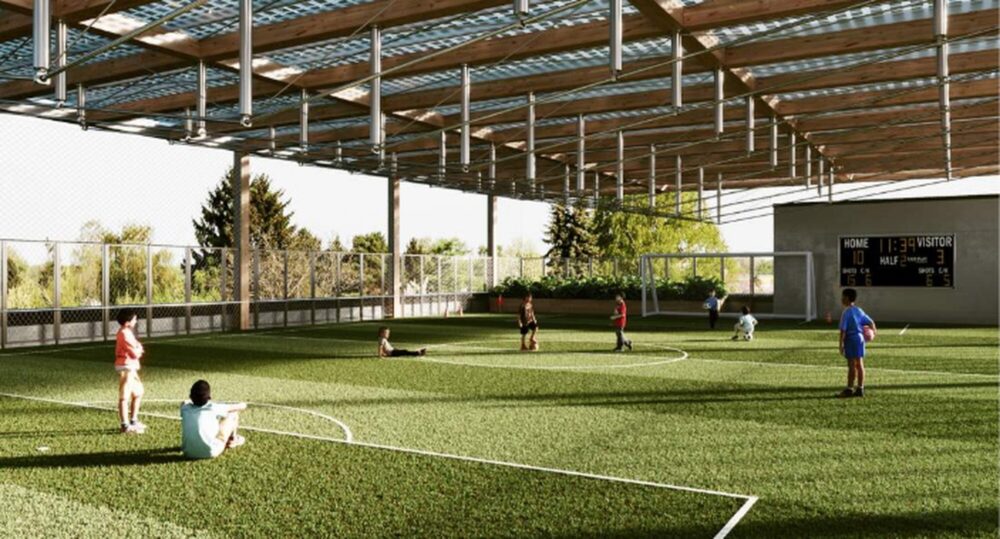
Our office has experience with hybrid wood and steel structural systems. Most recently, we implemented a custom glulam beam and steel bowstring truss roof at a charter school in Long Island. This system is lightweight and allows for long spans which has enabled us to use the roof as a soccer pitch; atop the structure sit photovoltaics that power the building, which doubles as a shield from precipitation, while still allowing sunlight penetration below. Hybrid solutions like this are based on a combination of programmatic, dimensional and code constraints which determine the appropriate structural system of a project.
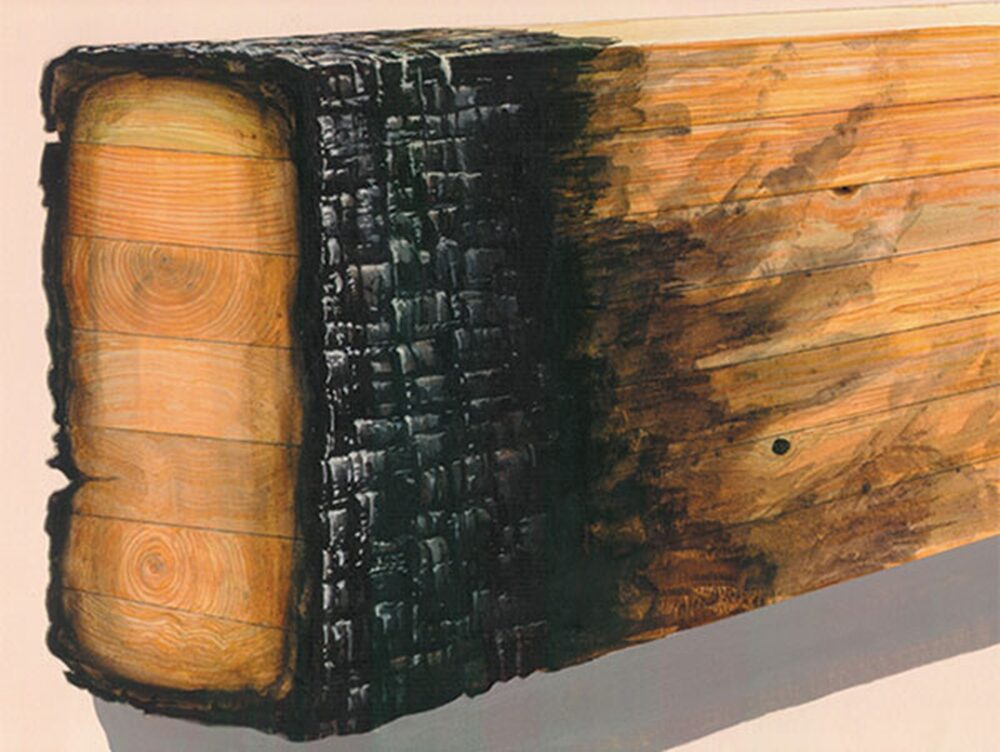
Clients often express concern about the fire resistance of a wood structure. The size of mass timber members are large - at least 6" x 6" for a column - and must be oversized beyond structural requirements. The charring properties of wood actually act as fireproofing so that fire can't penetrate to the depth of the structural core of the member (See Fig. 2). 1 Given this natural fire resistance quality, spray fireproofing and sheetrock wraps are not necessary in mass timber projects, eliminating such costs.
Other code and design issues that we have navigated while working with mass timber have ranged from:
- fireproofing of connections;
- the difference between primary and secondary structural elements;
- movement based on moisture content
A particular multi-disciplinary challenge we have confronted has been with acoustics and structure. We have seen that floor build-ups necessary to achieve desired acoustical ratings increase the thickness of a slab from the minimum structural requirements, in turn increasing cost. Thus far, our office has mitigated these increased costs by exposing the concrete floor and not having to use a finished product on top of it.
- 1 https://www.greenspec.co.uk/building-design/crosslam-timber-fire-resistance-and-rating/#:~:text=One%20of%20the%20major%20advantages,30%2C%2060%20and%2090%20minutes.